
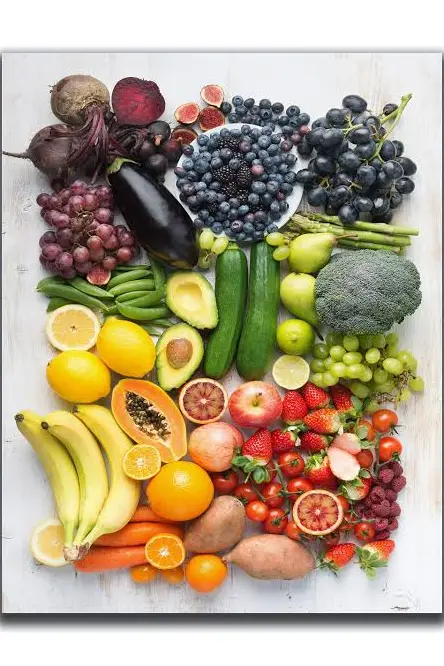
The carnivore camp has one argument that deserves a real answer: modern fruit is not the fruit your ancestors ate. It’s been bred sweeter, bigger, and shipped year-round in a form evolution never prepared you for. On that specific point, they’re largely right.
Where they overreach is the blanket dismissal — “fruit is toxic, fruit is candy, cut it all.” That conclusion throws out some of the most nutrient-dense food in the supply along with the real culprits.
This post is the honest middle. What fruits are essentially wild. What fruits are human inventions. What earns a place on an elite plate — and what doesn’t.
The Wild vs. Engineered Reality
Fruits that are essentially human inventions
Heavily bred, nearly unrecognizable from their wild ancestors:
Modern bananas (the Cavendish is a sterile clone; wild bananas are small, seedy, and barely edible). Modern apples (wild apples are small, sour, and astringent). Seedless grapes and watermelons (cultivated mutations that can’t reproduce without human help). Modern strawberries (created in 18th-century France by crossing two New World species). Most peaches, plums, nectarines, and cherries (bred for size and sweetness from smaller, often bitter wild stone fruits). Modern pears (wild pears are hard, gritty, and essentially inedible raw). Commercial pineapples. Nearly all citrus (descended from just three or four wild ancestors through centuries of hybridization). Commercial mangoes (wild mangoes are small, stringy, often turpentine-flavored).
Fruits that exist in forms close to their wild ancestors
Wild berries — blueberries, blackberries, raspberries, cranberries, elderberries, mulberries. Cultivated versions are larger and sweeter, but wild forms are still foraged and sold, and wild blueberries are nutritionally denser. Pomegranates — nearly unchanged. Figs — ancient domesticate but very close to wild. Dates — sweetness is natural to the species, not bred in. Olives — essentially unchanged. Avocados — bigger than wild versions, but structurally similar. Coconuts — the coconut you buy is the coconut nature made. Persimmons, papaya, and kiwi — all relatively close to their wild forms.
The carnivore argument has a point on bananas, modern apples, grapes, and citrus. It has almost no point on berries, pomegranate, avocado, or olives — those are close to what humans actually evolved eating.
Modern fruit isn’t ancestral food. But the answer isn’t to cut fruit — it’s to eat the ones that still resemble what your body was designed to process.
I. The Foundation: Fruits to Eat Without Hesitation
These deliver concentrated polyphenols, fiber, and micronutrients with minimal sugar impact. The closest modern analogs to ancestral fruit.
Berries — the undisputed elite category
Blueberries (wild preferred), blackberries, raspberries, strawberries, cranberries, mulberries, elderberries. Anthocyanins are among the most studied antioxidants in human nutrition — cardiovascular protection, brain function, anti-inflammatory effect, blood sugar regulation. Low glycemic, high fiber, high polyphenol density. Wild or low-bush blueberries carry roughly twice the antioxidant content of cultivated. One cup daily is a legitimate performance food.
Pomegranate (seeds, not juice)
Punicalagins, nitrates, anti-inflammatory polyphenols. Cardiovascular and recovery benefits in real research. The whole arils deliver fiber that blunts the sugar response.
Tart cherries
Melatonin content genuinely supports sleep quality and recovery. Anthocyanins reduce exercise-induced inflammation — studied in endurance and resistance athletes. Fresh, frozen, or unsweetened tart cherry in small amounts post-training.
Avocado
Technically a fruit. Monounsaturated fats, fiber, potassium (more than a banana), folate, vitamin K. One of the few fruits with essentially no glycemic impact.
Olives
Also technically a fruit. Oleuropein, vitamin E, monounsaturated fats. Underrated as a daily snack category.
Lemons and limes
Virtually no sugar, high vitamin C, support digestion and mineral absorption when added to water or over food. Unlimited.
II. The Rotation: Fruits to Eat Sparingly
Not villains — but not unlimited, either. These carry real nutritional value, but they’re easy to overdo, and the modern versions are sweeter and larger than what your ancestors consumed.
Stone fruits
Peaches, plums, nectarines, apricots, sweet cherries. Moderate sugar, decent fiber, real micronutrients. Seasonal, in-season, portioned — excellent. Out of season and shipped from across the world — less so. One serving, in season.
Apples and pears
Real fiber and polyphenol content, especially in the skin. But modern varieties are bred sweeter and larger than ancestral. Smaller heirloom varieties (Pink Lady, smaller Honeycrisp, Granny Smith for lower sugar) are better choices than oversized conventional. One small apple, not two large.
Citrus
Oranges, grapefruit, mandarins. Vitamin C, flavonoids, fiber. But real sugar content once you get past lemons and limes. Whole fruit only, never juice. One serving.
Grapes
High sugar, low fiber relative to berries. Fine as an occasional portion, not a daily handful-after-handful situation.
Melons
Cantaloupe, honeydew, watermelon. High water, moderate sugar, low fiber. Fine seasonally in controlled portions. Watermelon in particular is more glycemic than it feels.
Kiwi
Actually excellent — high vitamin C, reasonable fiber. Placed here mainly because it’s easy to overdo. One to two daily is fine.
Figs (fresh) and dates
Whole-food sugars with real mineral content (potassium, magnesium, iron), but calorically dense. Dates especially are essentially nature’s candy. Pre- or intra-workout fuel — excellent. Grazing at night — not.
Pineapple and mango
Real enzymes (bromelain in pineapple), real vitamins, but among the highest-sugar tropical fruits. Small portions, not a regular staple.
III. The Elite Standard: What to Avoid (or Strictly Limit)
Here’s where the carnivore argument is most defensible. When you’re optimizing every other variable — training, sleep, macros, hormones, recovery — these fruits stop earning their place.
Modern bananas — especially ripe
One of the most sugar-forward, calorically dense, genetically narrow fruits in the food supply. The Cavendish is a sterile clone bred for transport. A ripe banana is roughly 25-30 grams of sugar in a single fruit. Green bananas are a different conversation (resistant starch), but ripe Cavendish daily is the carnivore camp’s strongest point. If you want high-carb pre-workout fuel, there are better options.
Fruit juice — all of it
Orange juice, apple juice, grape juice, “cold-pressed” anything. Fiber stripped, sugar concentrated, glycemic response that rivals soda. Not a food. Not a health product. Marketing. This is where the carnivore argument is most correct.
Dried fruit
Raisins, dried mango, dried pineapple, dried apricots, bulk dates, craisins. Sugar concentrated four to five times by volume versus fresh. Most commercial dried fruit is also coated in added sugar, sulfites, or seed oils. Easy to overeat because the satiety signal is gone. Dates as measured pre-workout fuel are the one exception.
Fruit-based smoothies
Even “healthy” smoothies stack bananas, mangoes, pineapple, and juice into a glass that delivers 50-70 grams of sugar with pulverized fiber. The blending itself accelerates glucose response. A berry smoothie with protein and fat is a different equation. A tropical fruit smoothie is dessert.
Canned fruit in syrup
Nutritionally stripped, sugar-added, seed-oil adjacent in processing. No place in an elite protocol.
Conventional Dirty Dozen fruits
Strawberries, apples, peaches, pears, grapes, cherries, blueberries. Highest pesticide residues in the produce supply. Buy these organic or skip them. Cumulative glyphosate exposure matters for gut, hormones, and inflammation.
Oversized modern fruit
Softball-sized apples, foot-long bananas, plum-sized grapes. Bred for shelf life and appearance, not nutrient density. Smaller, seasonal, heirloom, and deeply colored is always the higher-nutrient choice.
The Elite Fruit Framework
- Anchor on berries. If you eat fruit daily, make it berries. It’s the one category where “eat more” is almost always correct.
- Eat seasonally and locally when possible. Ancestral fruit was seasonal. Year-round tropical consumption is evolutionarily novel.
- Whole fruit only — never juice, never smoothies as a meal replacement. Fiber is the point.
- Pair fruit with fat or protein. Berries with Greek yogurt. Apple with almond butter. Avocado as-is. Blunts the glycemic response and improves satiety.
- Time higher-sugar fruit around training. Dates, banana, pineapple, mango — if you eat them, eat them pre- or post-workout when glucose uptake is maximized.
- Treat fruit as a dose, not unlimited. The “it’s just fruit, it’s healthy” mindset is exactly the trap. Track it like any other carb source, especially in prep.
- Buy organic for the Dirty Dozen. Save money on the Clean Fifteen — avocado, pineapple, kiwi, mango, cantaloupe.
The Honest Take on the Carnivore Argument
Carnivores are right that most people eat fruit poorly — daily ripe bananas, fruit juice, smoothies, dried fruit, oversized modern varieties, year-round tropical consumption. For the average person eating fruit this way, cutting it does often improve energy, body composition, and inflammation markers.
But “fruit is bad” is too broad. A cup of wild blueberries, a pomegranate, tart cherries after a workout, and an avocado daily is not the problem — it’s actually some of the most nutrient-dense food available.
The problem is the form modern fruit consumption takes, not the concept of fruit itself.
Elite-level fruit consumption looks closer to ancestral patterns: seasonal, mostly berries, lower-sugar, whole form, moderate portions, paired with fat or protein, timed around activity. That’s the version that earns a place on an elite plate.
General health tolerates imprecision. Elite health doesn’t.
— Alexis, OBAB Fitness

