
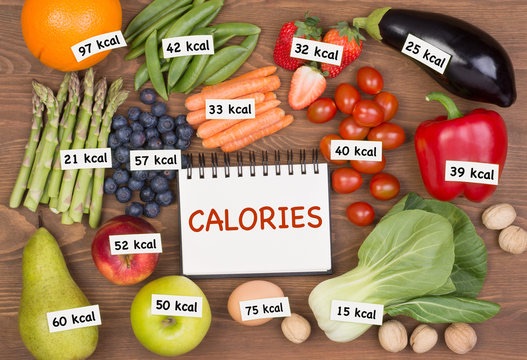
2,500 Calories Is Not 2,500 Calories: Why Food Quality Beats Calorie Counting
A practical look at the energy balance model — what it gets right, what it leaves out, and why what you eat matters as much as how much.
The Theory Everyone Knows
“Energy in, energy out” is the foundation of how weight works, and it deserves its reputation. The model is simple:
- Burn roughly what you eat, and your weight holds steady.
- Burn more than you eat, and you lose weight.
- Eat more than you burn, and you gain.
This is not a fad or a theory up for debate — it is thermodynamics, and it does not get violated. If someone is losing or gaining weight, energy balance explains it.
So let’s be clear from the start: calorie counting works for managing weight. If your only goal is to move a number on a scale, tracking calories will get you there. This article is not an argument against that.
It is an argument that weight is a narrow target — arguably the crudest measure of health we have — and that the energy equation, while true, hides almost everything that actually matters. Two people can hit the exact same calorie number and end up in completely different places.
The Catch: “Calories In” and “Calories Out” Are Not Fixed Numbers
The equation treats “calories in” and “calories out” as if they were simple, stable figures you read off a label. They are not. Both sides are outputs of a messier system — appetite, digestion, hormones, and activity — and the food you choose quietly tugs on every one of those levers.
Not all calories are absorbed
“Calories in” assumes you absorb everything you eat. You don’t. Whole, fiber-rich foods pass some of their energy through undigested — whole almonds, for example, appear to deliver roughly a quarter to a third fewer usable calories than their label suggests, because the cell walls resist digestion. Heavily processed foods, broken down and refined before they reach you, tend to be absorbed far more completely. Two foods with identical labels can deliver different real-world energy.
Digestion itself costs energy
Your body spends energy processing food — the “thermic effect of food.” The cost varies by nutrient: protein is expensive to process (roughly 20–30% of its calories), carbohydrates moderate (around 5–10%), and fat cheap (close to 0–3%). A high-protein meal therefore has a lower net energy-in than a high-fat meal of the same calorie count. Food composition is quietly editing the “energy out” side of the equation.
Some foods make you eat more
This is probably the biggest real-world disruptor. Ultra-processed foods are engineered to be eaten quickly and in large amounts before fullness catches up. Protein and fiber do the opposite — they blunt hunger. An ingredient can “break” your diet not by changing the math, but by changing how much you voluntarily put into the equation tomorrow.
The Heart of It: 2,500 Calories of Whole Food vs. 2,500 of Fast Food
Picture two people. Both eat exactly 2,500 calories a day. One eats whole foods — vegetables, legumes, whole grains, lean protein, fruit. The other eats fast food. The calorie sheets are identical. Here is where they diverge.
Satiety and the next meal
2,500 calories of whole food is a genuinely large volume — you may struggle to finish it, and you’ll stay full for hours. 2,500 calories of fast food is physically small and leaves you hungry again soon. Over weeks, the whole-food eater is naturally nudged to stay on target; the fast-food eater is pushed to exceed it. The numbers match today; the behavior they produce pulls apart fast.
What the calories are built from
Same number, very different raw materials. Whole foods at that level supply fiber, micronutrients, protein, and healthy fats. The fast-food version typically skews toward refined carbohydrates, added sugar, sodium, and processed fats, with little fiber. Your body uses those inputs differently — to build tissue and regulate hormones, or simply to store and burn.
Metabolic load
The fast-food pattern tends to spike blood sugar and insulin harder and more often, and the sodium and processed-fat load affects blood pressure and cardiovascular markers. As a one-off, that’s nothing to worry about. As a lifestyle, it is the pattern associated with insulin resistance, type 2 diabetes, and heart disease. Whole foods at the same calorie count produce gentler, steadier responses.
Body composition: same scale, different bodies
This is the point that ties it together. Two people can both weigh 170 pounds, both eat 2,500 calories — and one can be lean with good muscle mass while the other carries more body fat, including visceral fat around the organs, and less muscle.
Several things drive that gap:
- Protein intake. Whole-food diets usually deliver more protein, the raw material that preserves and builds muscle. Less protein means more of any weight maintained or gained is fat.
- Insulin and fat storage. Repeated blood-sugar spikes from refined carbs favor a hormonal environment that stores fat, particularly the visceral kind.
- Micronutrients. Building and maintaining muscle needs more than protein — it needs adequate vitamins and minerals. A nutrient-poor diet underfeeds that machinery even when calories look fine on paper.
- Training response. If both people exercise, the whole-food eater recovers better and adds muscle more effectively from the same workout.
The scale and the calorie sheet are identical. The bodies are not. And body composition — not weight — is what actually drives health, function, and how you feel.
The Most Practical Argument: Sustainability
Here is the argument that matters most in real life. A whole-foods way of eating is easier to sustain — because it manages hunger for you.
Most diets don’t fail because of bad math. They fail because they are unsustainable. Counting calories while constantly hungry is a willpower battle, and willpower eventually loses. A way of eating that keeps you full and satisfied is one you can stay on for years without white-knuckling it.
That reframes whole foods entirely: not the disciplined, harder path, but the easier one. The calorie target still applies — whole foods just make hitting it feel almost automatic.
It’s About Patterns, Not Single Meals
None of this means an occasional fast-food meal will derail your health. It won’t. A single meal is noise. What matters is your default — what your eating looks like across months and years. The goal is not perfection or guilt; it is a baseline that quietly works in your favor most of the time.
The Bottom Line
Energy in, energy out is true. It governs the number on the scale, and calorie counting is a legitimate tool for weight management.
But weight is only one outcome, and it is the bluntest one. Cardiovascular health, blood sugar regulation, muscle mass, energy levels, inflammation, and disease risk over decades — none of that shows up on a calorie sheet. Two diets can produce the same weight and radically different ten-year outcomes.
Think of it this way: calories are the quantity of fuel. Food quality is the grade of that fuel — and what it does to the engine. A car will run on the wrong fuel for a while. The question is what you want the engine to look like in ten years.
That is the case for a lifestyle change rather than a calorie spreadsheet. Not because the math is wrong — but because the math was never the whole story.
This article is for general educational purposes and is not medical or nutritional advice. Individual needs vary with age, activity level, health conditions, and medications. Consult a qualified healthcare professional or registered dietitian before making significant changes to your diet.

