
Three flagged numbers on my lipid panel — and the four numbers on the same panel that prove I’m in excellent metabolic health.
This is my actual lipid panel, drawn at age 54.
Total cholesterol: 240 mg/dL. Flagged. Above the 200 cutoff.
LDL cholesterol: 149 mg/dL. Flagged. Above the 100 target.
Non-HDL cholesterol: 167 mg/dL. Flagged. Above the 130 ceiling.
Three flagged numbers. Three red exclamation marks on the report. In most primary care offices, this is the panel that triggers the statin conversation. The doctor walks in, points at the LDL, and says some version of: “Your cholesterol is high. We need to get you on something to lower it. Let’s start with 20 mg of atorvastatin and recheck in three months.”
And they’d be wrong.
Not “technically defensible but maybe overcautious.” Wrong. Wrong about what’s happening in my body. Wrong about what’s actually elevating my cardiovascular risk — because nothing is. Wrong because they’re reading the wrong numbers on a panel that already contains the right answer.
I coach clients to improve their health, their fitness, and their bodies. Many of them come to me already on statins, on metformin, on prescriptions for type 2 diabetes and high cholesterol that they’ve been told they’ll be on for the rest of their lives. A significant part of what I do is read their blood panels with them and help them formulate the right questions to bring to their doctors — questions that let them take control of their own care and, in case after case, work toward coming off the medications they were told were permanent.
So I read lipid panels every day. And I can tell you exactly why my panel — the one that just got flagged for “high cholesterol” — is the panel of a metabolically healthy woman, not a candidate for a statin.
Here are the four numbers on the same panel that tell the actual story.
The four numbers that matter
HDL cholesterol: 73 mg/dL. Far above the 50 floor for women. HDL is the protective lipoprotein — the particles that pull cholesterol out of arterial walls and shuttle it back to the liver. Elevated HDL is a hallmark of metabolic health, regular strength training, and adequate dietary fat from clean sources. It is the single most underrated number on the panel.
Triglycerides: 78 mg/dL. Excellent. Well under the 100 mg/dL threshold that signals carbohydrate-driven liver dysfunction. Low triglycerides mean my liver isn’t being forced to package excess carbohydrate into VLDL particles. The metabolic engine is running clean.
Fasting glucose: 77 mg/dL. In the optimal zone — the 70s, not just “under 100.” My cells are responding to insulin properly. There’s no metabolic dysfunction brewing under the surface.
hsCRP: <0.2 mg/L. This is the most important number on the entire panel, and almost nobody knows to look at it. High-sensitivity C-reactive protein measures systemic inflammation — the actual mechanism that converts circulating cholesterol into arterial plaque. The optimal cutoff is <1.0 mg/L. Mine is so low it’s below the lab’s ability to detect.
I have no measurable arterial inflammation. None.
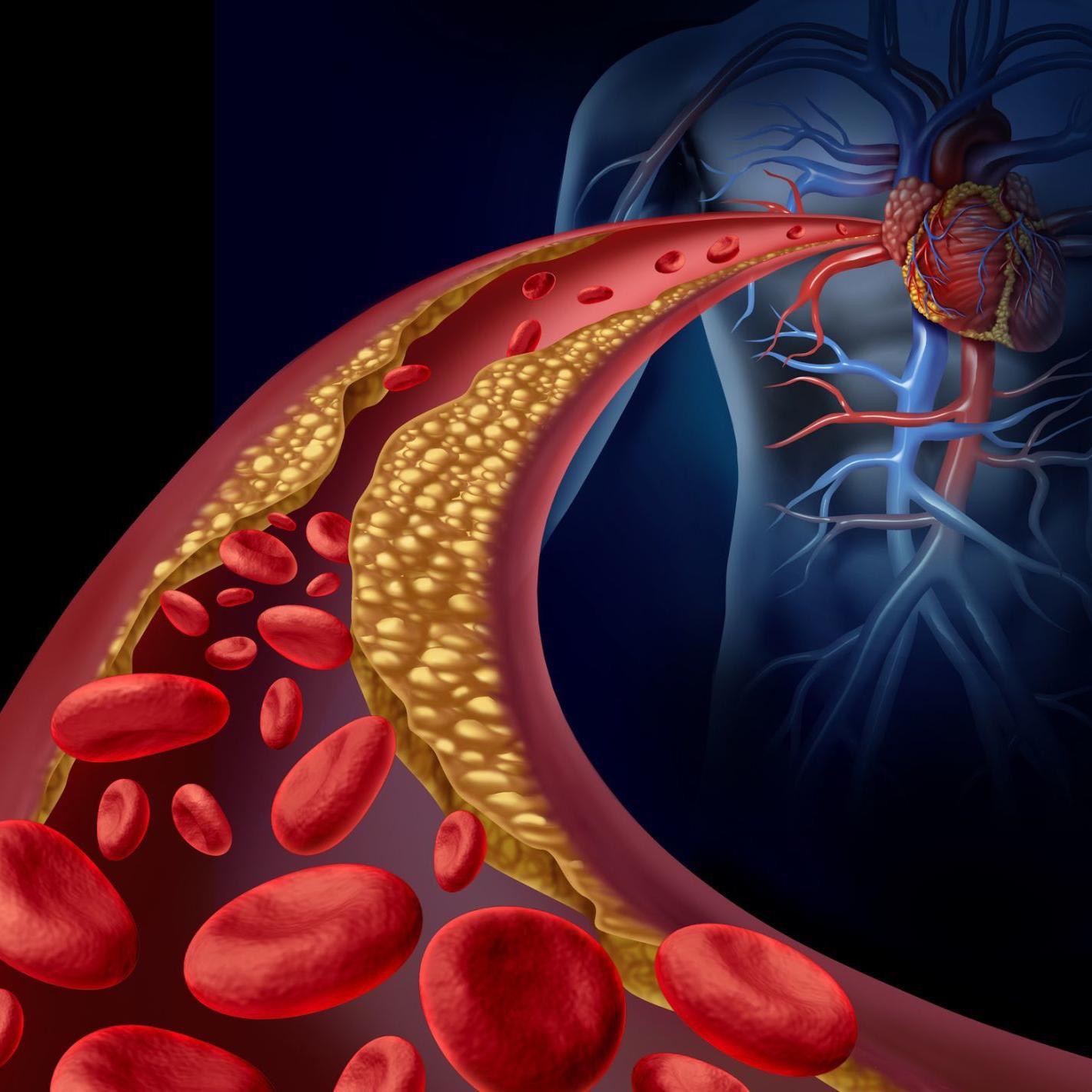
Inflammation is what drives atherosclerosis. Cholesterol is a passive cargo molecule. Without inflammation oxidizing LDL particles and damaging the endothelium, there is no plaque cascade — regardless of how many LDL particles are in circulation. A preventive cardiologist quoted in Sutter Health puts it bluntly: “It’s rampant inflammation that causes heart attacks, not high cholesterol. In fact, more than half of all heart attacks occur in people who have normal cholesterol levels.”
The reverse is also true: in the absence of inflammation, “high” cholesterol is dramatically less dangerous than the standard guidelines suggest.
The ratio that ties it all together
Take the triglycerides and divide them by HDL. Both numbers come straight off any lipid panel. The calculation takes five seconds and tells you more about metabolic health than the rest of the panel combined.
78 ÷ 73 = 1.07
The cutoffs (US units, mg/dL):
- Under 1.5 — Optimal. Insulin sensitive. Large, buoyant LDL particles (Pattern A) almost certain.
- 1.5 to 2.0 — Good.
- 2.0 to 3.0 — Borderline. Insulin resistance developing.
- Above 3.0 — Strong predictor of small dense LDL (Pattern B). Atherogenic profile emerging.
- Above 3.5 — Significantly elevated cardiovascular risk, even with “normal” LDL.
A trig/HDL of 1.07 is deep in the optimal range. The mechanism behind this is one of the most clinically important patterns in lipidology and is almost never explained to patients:
When insulin resistance is present, the liver overproduces VLDL particles packed with triglycerides. Serum triglycerides rise. Once triglycerides cross roughly 100-130 mg/dL, an enzyme called cholesterol ester transfer protein (CETP) starts swapping triglycerides into LDL particles in exchange for cholesterol. Hepatic lipase then hydrolyzes those triglyceride-enriched LDL particles into small dense LDL — the highly atherogenic Pattern B. The same CETP process strips cholesterol from HDL and replaces it with triglycerides, which causes those HDL particles to be cleared faster by the liver. HDL drops.
End result: high triglycerides + low HDL + small dense LDL + elevated atherogenic particle count, all driven by one upstream problem.
The reverse is what’s happening on my panel. Triglycerides at 78 mean the CETP exchange isn’t being triggered. HDL at 73 means my HDL particles are intact and functional. The 149 LDL is almost certainly Pattern A — large, fluffy, low-risk particles. The cholesterol is high because my body is building bigger particles, not because I have more atherogenic ones.
This is the pattern most coaches and most doctors miss. The total cholesterol number went up. The risk did not.
What the standard panel doesn’t tell you
A standard lipid panel measures the cholesterol content of each particle class. It does not measure the number of particles. Two people with identical LDL of 149 can have wildly different cardiovascular risk depending on whether their particles are large and full or small and densely packed.
The marker that solves this is ApoB — apolipoprotein B, the structural protein that wraps around every atherogenic lipoprotein particle. One ApoB per particle. Counting ApoB counts the actual number of plaque-forming trucks circulating in the bloodstream. A 2025 systematic review across 15 studies and over 593,000 participants found ApoB outperformed LDL-C as a cardiovascular risk predictor in 9 out of 9 head-to-head comparisons. The European Society of Cardiology, the National Lipid Association, and most preventive cardiologists now consider ApoB the superior risk marker.
It costs about $30 cash pay at LabCorp or Quest. It is almost never on a standard panel. It fundamentally changes the conversation.
Given my pristine trig/HDL ratio, my undetectable hsCRP, and my optimal fasting glucose, my ApoB would almost certainly come back low despite the “high” LDL. The total cholesterol of 240 and the LDL of 149 are not telling the story the panel makes them appear to tell.
The second test that would close the case is a coronary artery calcium (CAC) scan — a low-radiation CT scan that directly visualizes calcified plaque in the coronary arteries. It’s not a risk predictor. It’s a direct measurement of whether disease is actually present. A CAC score of zero is associated with roughly a 1% major cardiac event rate over ten years, regardless of cholesterol level. People with a CAC of zero do not have heart disease, period.
For someone with my metabolic profile, a CAC scan would almost certainly come back at zero. That single test would resolve the entire conversation. It costs $75 to $400 cash pay and is almost never covered by insurance for screening — because the system would rather sell statins.
The framework
A lipid panel is a partial picture. To read one properly — yours, mine, or anyone else’s — the right order of operations is:
1. Calculate trig/HDL first. Before looking at LDL or total cholesterol. If it’s under 1.5, the LDL number is much less meaningful than it looks. If it’s above 3.0, the LDL number is more concerning than it looks regardless of how “normal” it appears.
2. Check HDL on its own. Under 50 (women) or 40 (men) is its own flag, regardless of triglycerides. Low HDL is one of the most consistent signals of metabolic dysfunction and tracks closely with visceral fat and insulin resistance.
3. Check fasting triglycerides on their own. Anything above 150 is a flag. Anything above 100 paired with low HDL is the classic insulin resistance dyslipidemia.
4. Demand an hsCRP test. It belongs on every lipid panel ordered, in every primary care setting. The optimal range is <1.0 mg/L. Anything above 3.0 is a warning sign that warrants follow-up, regardless of cholesterol numbers.
5. Ask for ApoB. If your doctor doesn’t know how to order it, find one who does — or use a direct-to-consumer lab. This is the single most informative cardiovascular marker that’s not on your standard panel.
6. After 40 (or earlier with family history), get a CAC scan. This is the closest thing to actually looking at the disease. If your CAC is zero and your hsCRP is low, you do not have a cardiovascular problem regardless of what your cholesterol numbers say.
What’s not on the list: total cholesterol in isolation. LDL-C in isolation. The chol/HDL ratio in isolation. None of these tell you what you need to know. The whole panel — read in the right order — does.
What this means for me, and what it means for you
My elevated total cholesterol and elevated LDL are not problems. They are the byproduct of a metabolic system functioning well: a liver producing large, structurally robust lipoprotein particles, an HDL fraction doing its protective job, no inflammation to oxidize anything, no glucose dysregulation, no insulin resistance, no atherogenic dyslipidemia.
The “high cholesterol” diagnosis the standard panel implies is not a diagnosis at all. It is a misread of a marker in isolation, divorced from the context that gives it meaning. If I walked into a typical primary care appointment with this panel and didn’t know what I know, I’d be told my cardiovascular risk is elevated. The opposite is true. Every metabolic indicator on my panel that actually predicts disease points to excellent health.
If you have a panel that looks like mine — flagged cholesterol numbers but a trig/HDL under 1.5, an HDL above 50, fasting glucose under 90, and a low hsCRP — the conversation about statins is the wrong conversation. The right conversation is: let’s confirm the picture with ApoB and a CAC scan, and if both come back clean, we’re done here.
That conversation almost never happens. It should be the standard of care. Walking my clients through how to ask for it — and how to advocate for themselves once they see their full panel through this lens — is one of the most consequential things I do as a coach. Because once someone understands what their numbers actually mean, the question stops being “how do I lower my cholesterol?” and starts being “how do I build the kind of metabolic health that makes the cholesterol number irrelevant?”
That’s an entirely different conversation, and it leads to entirely different outcomes — including, for many of my clients, getting off medications they were told they’d be on for life.
The reason this conversation almost never happens in primary care is the subject of the rest of this series.
What’s coming next
This was the framework piece — how to actually read a lipid panel. The next post pulls back to the bigger picture: the longevity data on cholesterol that mainstream medicine doesn’t want to discuss. Because as it turns out, the people who live the longest don’t have the lowest cholesterol. They have cholesterol levels that current guidelines would label as “high.” That’s not a contrarian opinion. It’s what the largest mortality studies in the world have been showing for decades.
Read on.
This post is part of a three-part series on cholesterol, the lipid panel, and what the research actually says.
- My Doctor Would Tell Me to Take a Statin. Here’s Why They’d Be Wrong. (this post)
- The Cholesterol Longevity Data Your Doctor Won’t Show You
- Your Brain on Low Cholesterol: The Statin Conversation Nobody’s Having

